
New legal challenges for Santos gas project
New traditional owner opponents against Santos’ $5.8 billion Barossa offshore gas project in the Northern Territory have joined the legal battle, as a Federal Court proceeding started that could be a key test case over underwater Aboriginal cultural heritage approvals.


Economy dives in resilience ranking
Deteriorating energy infrastructure, lacklustre entrepreneurship and poor competition rules are holding back the Australian economy, with a new report suggesting a drop in competitiveness is putting at risk future prosperity. In a ranking of the most resilient economies, Australia fell to 20th place from first place in 2004, analysis by Institute of Public Affairs senior fellow Kevin You found.


Red tape now a major strain
Michael Briggs is drowning in red tape. Briggs says his manufacturing firm Six Wheeler Conversions, which converts four wheel vehicles to six wheels, has spent $300,000 on regulations in the past three years meeting state and federal certification requirements Briggs says new vehicle conversions require federal certification while modifications on preregistered vehicles require state certification. He says a new federal application system was implemented for second stage vehicle manufacturing approvals three years ago, quadrupling the approval process, typically taking more than five months per vehicle model.
As good as gold
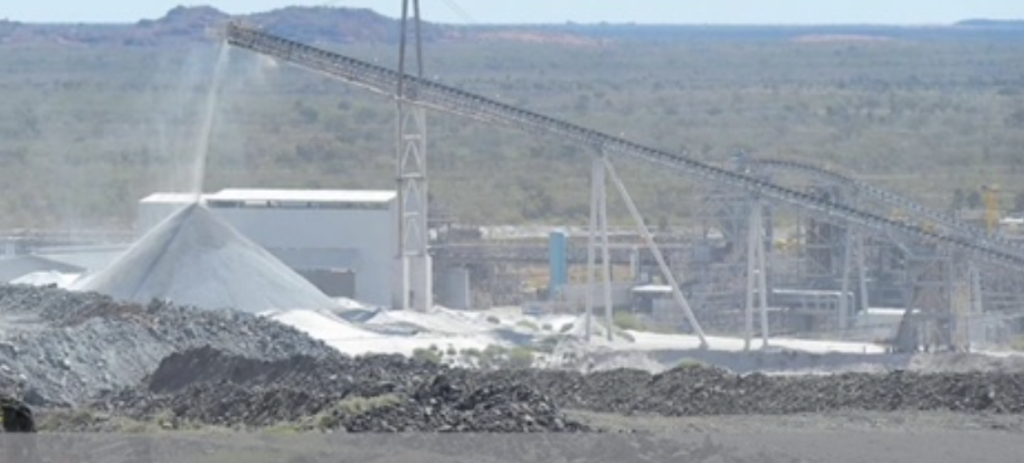
Premier Roger Cook said trade in resources continued to underpin WA’s economic strength.
“Every Western Australian can be proud of the success of our resources sector, and the massive contribution it makes to the national economy,” he said. “As the world moves to a low-carbon future, we’re positioning WA as a renewable energy powerhouse — and our record lithium sales show we’re on the right track.”
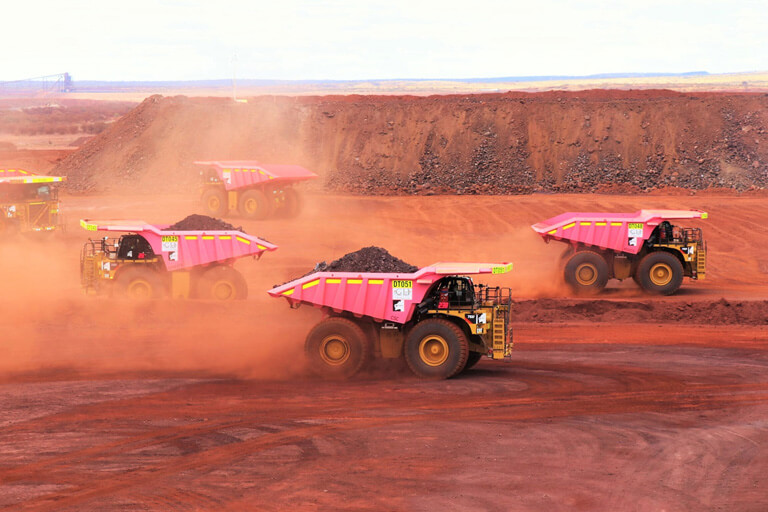
Hancock Prospecting warns Closing Loopholes Bill could see mining move to countries with lower standards
“If increased regulatory burdens cause new mining projects to be delayed or cancelled, Australia will be unable to satisfy the rising iron ore demand created by net zero targets,” Hancock Prospecting chief executive of group operations Gerhard Veldsman said. Gina Rinehart has warned controversial industrial relations reforms could push mining away from Australia to countries with lower environmental standards.

RED TAPE GROWING FASTER THAN ECONOMY
Australia is struggling under the burden of red tape that is growing at nearly twice the rate of the national economy, leading to urgent calls for parliament to act to cut out-of-date regulations and ban new rules from being imposed without old ones being repealed.

IR bill could smash economy
Until recently, debate over the Anthony Albanese’s Closing Loopholes legislation has largely ignored a factor that could smash the economy. Unless this is clarified, resources and energy operations could shut. Thousands of workers could be out of a job. Frankly, it is ludicrous to think the FWC, with only one of its 50 members ever having run a substantial business, could be allowed to make assessments about future work plans that experienced business managers and board directors haven’t yet contemplated.

BHP says proposed labour laws threaten $3.2b Australian investment
The world’s largest mining group, BHP, says the government’s proposed same job, same pay policy could jeopardise $US2 billion ($3.2 billion) worth of investment it has planned for its local copper business. BHP chief executive Mike Henry told shareholders at its annual meeting in Adelaide on Wednesday morning that the bill would also damage the Australian economy. “BHP strongly opposed the Same Job Same Pay Bill not only because of the damage it threatens to do to our business, but also for the hit it will have on Australia’s economy, to Australian jobs and to Australia’s productivity and international competitiveness,” Henry said

IR bill is still a piece of work
Major employer groups have ramped up their calls for the Federal Government to dump or delay its controversial industrial relations changes, saying recent concessions do not go far enough. But the broader business groups believe the changes are not properly detailed and do not allay other fears about the laws.

Australian mining red tape hurts its global investment case-Hancock
Australia’s slow pace of mining approvals is diminishing its attraction as a global investment destination, Hancock Prospecting, owned by Australia’s richest person Gina Rinehart, said on Tuesday. “The current policy environment, duplication of processes, overreach from all departments and delays to approvals is negatively impacting new investment into the mining industry and is reducing Australia’s competitiveness in the international resource sector,” said Hancock.